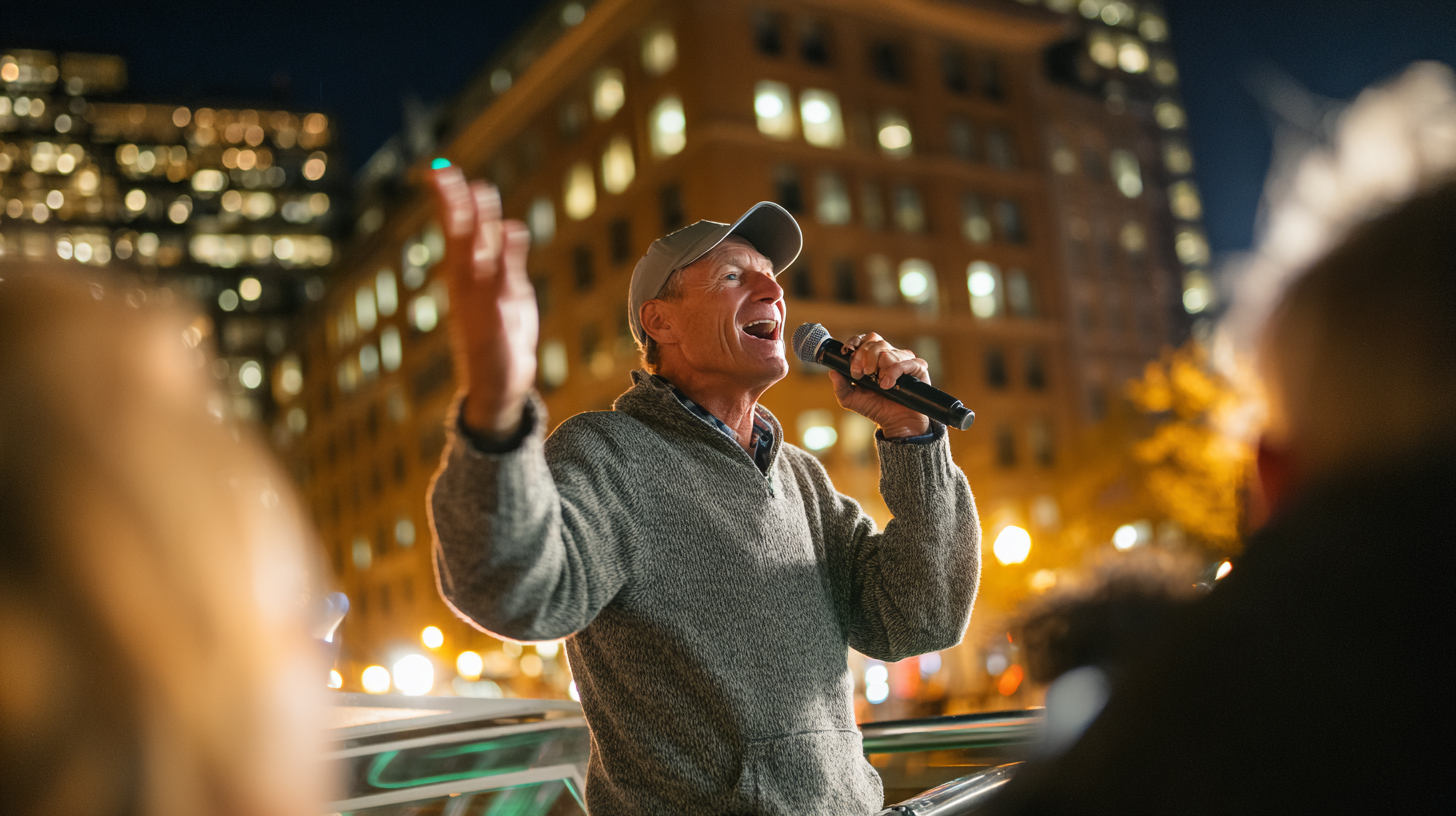
Chicago’s architecture story is built around the river and the skyscraper: a tight corridor where buildings stack up like a timeline. Miami is the counterpoint — and Miami Architecture Cruises is built around that idea. Our city is not primarily “canyon architecture”—it’s waterfront architecture. Miami’s signature design language is shaped by sun, salt, storms, privacy, and the idea that the “front” of the property is the water.
That’s why the most convincing “architecture tour” experience in Miami isn’t always a walking route or a museum talk—it’s the perspective you get when the city opens up from Biscayne Bay and the Intracoastal. On the water, Miami’s architecture reads the way it was intended: as a shoreline composition—islands, skyline, estates, cultural buildings, and modern icons all stitched together by view corridors and sea-level horizons.
Quick links: Types of Architecture • Types of Tours
Why Miami Architecture Is Best Seen From the Water
Miami’s most memorable architecture is designed to perform from a distance. The water gives you the distance. It also gives you the right angle.
From land, you’re often blocked by hedges, gates, setbacks, parking podiums, and private driveways. The “show” is hidden. From the water, you get a continuous reveal: the edges of islands, the bay-facing elevations, the skyline’s silhouette, and the relationship between civic buildings and the shoreline.
That’s also why Miami’s waterfront architecture feels different from other cities: it isn’t just “pretty buildings near water.” It’s architecture that assumes the viewer is floating. You see that clearly around Museum Park—where Pérez Art Museum Miami (PAMM) is explicitly oriented to the park, the water, and the city, designed as an open structure on Biscayne Bay.
And then there’s the “Miami paradox”: the city is vulnerable to climate risk, yet still builds bold waterfront statements anyway. That tension—aspirational design versus environmental reality—is part of the story, and you can feel it most from the bay. For the cleanest views, Miami Waterfront Boat Tours is the best starting point. .
What types of architecture do you see on a boat cruise
A good Miami boat route gives you more than “celebrity homes.” It’s a moving sampler of Miami’s architectural DNA: Mediterranean Revival legacy, mid-century Miami experimentation, and today’s starchitect era—plus the everyday luxury of modern waterfront residential design.
Below are the major styles you’ll see and the real buildings or areas that represent them. Think of this as a field guide: Miami’s shoreline starts reading like a design timeline once the major styles are recognizable.
For more guides like this, visit our Miami Architecture Cruises Blog.
Modern
Miami modern is about clean lines, water-facing glass, and indoor/outdoor flow. Even when the building is expensive, the design logic is practical: capture the view, catch the breeze, and treat the water as the main frontage.
Real modern examples you can point to (often visible on bay-facing routes):
- Museum Park waterfront: the museum zone where contemporary architecture is intentionally framed by the bay (PAMM and Frost sit here).
- Brickell bayfront skyline edges: modern residential towers that read best from the water because the bayside facade is the “hero” side.
What to call out on a tour (the architecture lens, not the gossip lens):
- Curtain-wall glass and view-orientation
- Terraces as living rooms
- Docks as “front doors”
Neoclassical, Art Deco, Brutalist, and International Style
Miami isn’t one clean architectural timeline—it’s layers. On the water, those layers show up side-by-side instead of being scattered across neighborhoods, which makes the contrasts easier to understand.
Concrete, named examples (public-facing and verifiable):
- Freedom Tower (Downtown Miami): a Mediterranean Revival landmark modeled on Seville’s Giralda, with Spanish/Moorish and Baroque influence; originally built as The Miami News headquarters and later used for Cuban refugee processing.
- Miami Marine Stadium (Key Biscayne): a 1960s concrete modernist icon by architect Hilario Candela, often discussed as “tropical brutalism” / concrete modernism.
How to frame this for readers:
- Miami’s “historic” isn’t just Art Deco—it also includes Mediterranean Revival civic symbolism (Freedom Tower) and mid-century civic experimentation (Marine Stadium).
Festival Style
Festival-style is “public leisure architecture”—spaces built around tourism, crowds, waterfront energy, and experience-first design. Miami has a lot of this DNA because Miami is a destination economy.
What a cruise makes easy to understand:
- How waterfront districts are designed for movement and views
- Why open-air circulation matters in a tropical city
- Why “the vibe” is engineered
Concrete example you can cite as part of the waterfront cultural spine:
- Museum Park / Maurice A. Ferré Park area: a civic waterfront zone anchored by PAMM and Frost, designed to engage the bay and the park.
Rustic stilt construction
Miami also has a quieter architecture story: how people built at the waterline before today’s engineered luxury. Stilt logic—elevation, airflow, storm awareness—is South Florida survival architecture, and you can still spot echoes of that logic in how waterfront living is designed today.
What to explain (and what guests often notice from the water):
- Older shoreline structures that sit higher, simpler, and more utilitarian
- The contrast between “built to last” and “built to impress”
This section works best as interpretation on your tour: stilt logic is the root of today’s “waterfront-first” culture.
Contemporary & High-Tech
This is where Miami has become a global architecture flex city: dramatic forms, signature silhouettes, and structural statement-making. From the water, these icons read as a collection—like a curated skyline gallery.
Concrete, named examples:
- Pérez Art Museum Miami (PAMM): designed by Herzog & de Meuron, positioned on Biscayne Bay with hanging-garden columns and an open structure oriented to city/park/water.
- Phillip and Patricia Frost Museum of Science: designed by Grimshaw, a four-building complex in an “open-armed stance” facing breezes off Biscayne Bay at Maurice A. Ferré Park.
- One Thousand Museum (1000 Biscayne Blvd): a Zaha Hadid-designed residential tower opposite Museum Park, explicitly shaped as a skyline landmark.
How to frame it:
- Miami’s new era is “museum district + skyline icons,” and the water is the best place to read them as a connected story rather than isolated Instagram shots.
Mediterranean Revival
Mediterranean Revival is one of the clearest “Miami signature styles”—romantic Europe reinterpreted for subtropical life. It’s the architectural language of old Miami prestige, and it still sets the tone for how waterfront luxury is expressed.
Concrete, named example:
- Vizcaya Museum & Gardens: a waterfront estate conceived as a subtropical interpretation of an Italian villa (Veneto inspirations), adapted to climate; also designated a National Historic Landmark and described as a 1916 waterfront estate.
What to point out from the water (or as a shoreline reference in your storytelling):
- Formal symmetry and composition
- Terraces/loggias designed for breeze
- The idea of the waterfront estate as a status language long before modern towers
Art Deco & Moderne
Art Deco is Miami’s most famous architecture export—especially Miami Beach—and it influences how visitors expect “Miami” to look and feel. Even when your cruise isn’t in South Beach, Deco remains the reference point people carry in their head.
Concrete references:
- Ocean Drive’s iconic Art Deco stretch (5th–15th streets): the strip most people recognize from films, neon imagery, and classic Miami visuals.
- The Carlyle (Ocean Drive, 1941): a named example frequently highlighted in Art Deco building guides.
How to connect it back to water-based tours:
- Art Deco sells the fantasy on land; the bay shows how Miami evolved beyond that era into global modern luxury.
Miami Modernism (MiMo)
MiMo is Miami’s mid-century personality: optimistic, playful, and built for leisure culture. While MiMo is often best experienced on curated land routes, its influence still matters because it explains the city’s postwar design confidence.
Important clarity for the blog:
- MiMo is usually best experienced by curated routes (often land-based), but its design spirit echoes in waterfront leisure architecture and postwar Miami expansion.
- For credibility: Miami Beach walking tours frequently teach MiMo as part of the broader design story (MDPL explicitly includes MiMo in its tour descriptions).
Mediterranean Style
Mediterranean style is the everyday cousin of Mediterranean Revival—less museum-piece, more “Miami waterfront lifestyle.” In practice, it’s about comfort in heat, shade, and outdoor living, with forms that feel right in a coastal setting.
How to make it feel real:
- Explain why arches, courtyards, terraces, and stucco are practical in heat
- Connect the style to bayfront living patterns (outdoor rooms, shade, airflow)
You can also anchor the heritage side of Mediterranean style through Miami’s earlier civic and symbolic architecture (like Freedom Tower) to show that this look isn’t just luxury—it’s part of the city’s long design vocabulary.
Why Miami Architecture Looks Different at Night
Miami architecture looks completely different at night for one simple reason: the buildings wake up. During the day, you notice shape, height, color, and skyline. But once the sun drops, the city’s lighting design takes over — and suddenly every tower feels like it has its own personality.
At night, lighting becomes the “paintbrush.” Lines look sharper, curves look smoother, and entire sections of a building that blended in during daylight start to pop. Most modern Miami towers are designed with nighttime in mind: edge lighting, crown lighting, balcony glow, and layered LEDs that outline angles you’d barely notice in the daytime. From the water, you’re not stuck looking up from a street corner with trees, traffic, and buildings blocking your view. You get clean sightlines across the full skyline, plus reflections rippling on the bay that make the whole scene feel bigger, deeper, and more alive. A daytime cruise is bright, clear, and informative — but a night cruise is a vibe. It’s calmer, cooler, and more immersive. The city feels closer. The lights pull your attention from building to building, and the skyline stops being a backdrop and starts being the main event.
What You’ll See on a Miami Architecture Night Cruise
This is where a Miami Architecture Night Cruises separates itself from everything else on the water. You’re not just seeing the same sights later in the day — you’re seeing them transformed. As the boat glides across Biscayne Bay, the city opens up in layers. The Downtown Miami skyline and Brickell rise in front of you, fully illuminated, each building lit with its own signature glow. Glass towers reflect off the water, creating doubled skylines that feel almost unreal.
Passing the Venetian Islands, the contrast becomes even more striking — quiet, low-lit residential islands set against the bright pulse of the city. You’ll cruise by Star Island and Millionaire’s Row, where waterfront mansions sit softly lit behind palms, and luxury yachts idle nearby, glowing against the dark water. From there, the view stretches toward the Port of Miami, where massive cruise ships and cargo vessels add scale and motion to the night scene. In the distance, Miami Beach lights up the horizon, its glow reflecting across the bay and framing the skyline from a completely different angle. At night, everything feels calmer. There’s less boat traffic, fewer distractions, and more space to take it all in. The breeze cools the air, the water smooths out, and the reflections become part of the experience. Instead of chaos, you get contrast. Instead of noise, atmosphere. It’s Miami — just quieter, sharper, and more alive after dark.
Why isn’t the architecture cruise popular in Miami
Miami has the ingredients for a world-famous architecture cruise, but historically the product has been positioned differently. The views are there. The landmarks are there. The demand for “something memorable on the water” is definitely there. What’s been missing is consistent architecture-first storytelling.
The biggest popular architecture tour is in Chicago
Chicago’s architecture cruise became iconic because it’s framed as education-first and institution-backed. Miami’s water tours have generally been framed as sightseeing-first. That difference is fixable—but it explains the gap.
Miami is fascinated with celebrities and it is mostly the tours offered
Miami’s waterfront tour market heavily emphasizes mansion owners and celebrity names because it converts fast. Many Biscayne Bay cruises explicitly market “rich and famous homes + skyline.”
The downside is that the architecture becomes background scenery rather than the main subject. The tour sells gossip when it could sell meaning.
What would make Miami’s architecture cruises better
The fix is not to get more “facts.” The fix is to deliver a clear architecture narrative that teaches guests how to see Miami from the water—without turning the cruise into a lecture.
Lack of knowledgeable tour guides and education
Architecture tours win when guides are trained to explain the “why” behind what people are looking at. That includes:
- Why a building looks like it does
- Which era it belongs to
- What materials and climate constraints shaped it
- How the city evolved over time
Miami has architecture expertise in the community (AIA Miami exists as the local chapter for architecture professionals), but that knowledge hasn’t historically been translated into a mainstream, water-based “docent culture.”
Miami doesn’t evolve and they continue to do the same thing over and over
This is the “template problem.” If the market rewards the same celebrity script, operators repeat it. Meanwhile the city itself has evolved massively into a contemporary architecture hub—meaning tours are often stuck telling yesterday’s story while the skyline tells today’s story.
There is not backing by a local architecture center
Chicago benefited from a widely recognized architecture institution that made education part of the brand. Miami’s architecture-tour ecosystem is more fragmented, which creates inconsistency. The opportunity is to build trust by developing stronger architecture-first narration and partnerships over time.
Miami Art Deco tours dominate Miami tourism
If you ask most visitors what “Miami architecture” means, they’ll describe South Beach Art Deco before they mention Biscayne Bay. That’s not because Miami lacks great waterfront architecture—it’s because Art Deco walking tours became the default architecture experience that tourists recognize.
Walking tour
Walking tours dominate because Art Deco is dense, photogenic, and easy to package into a 90-minute experience. It’s also where people already are—South Beach.
- Art Deco walking tours are the default architecture product in Miami tourism, so water-based architecture tours are competing against a very established expectation.
The Mecca of Art Deco is in Miami Beach
The Art Deco Historic District is the cultural shorthand for Miami design. Visitors can literally walk the most famous stretch on Ocean Drive (5th–15th) and feel like they “did Miami.”
Art Deco Design and preservation league
The Miami Design Preservation League (MDPL) is a major reason Art Deco tourism is so organized. Their “Official Art Deco Walking Tour” explicitly teaches Art Deco plus related styles (including Mediterranean Revival and MiMo).
- Miami’s architecture education has been land-based and Art-Deco-weighted, not bay-based.
What types of architecture tours are there in Miami
Miami actually has multiple architecture tour formats, but they serve different visitor intents. Some are built for detail and history, others for scale and scenery. Understanding the difference helps people choose the right tour—and sets expectations correctly.
Walking tour
Walking tours are best when you want close-up detail and preservation context—especially in historic districts like South Beach.
Best for:
- Facade details
- Preservation stories
- Historic districts like South Beach
Anchor example:
- MDPL’s official tours are the clearest “architecture education” product that tourists recognize.
City Tour
A city tour is where Miami’s full architecture story becomes coherent—not only Art Deco, but also civic landmarks, contemporary icons, and design-culture neighborhoods. This format is also high search-intent because “Miami city tour” queries are huge, and architecture city tour is a smarter niche within that demand.
What a city architecture tour can connect in one narrative:
- Downtown civic landmarks like Freedom Tower
- The contemporary museum district on Biscayne Bay (PAMM + Frost)
- Design culture areas (Miami Design District installations like Buckminster Fuller’s Fly’s Eye Dome and Zaha Hadid’s Elastika at The Moore building)
Cruises
Cruises are the best seat in the city for understanding Miami’s architecture at scale. The water gives you continuity, clean sightlines, and the right angle to read the skyline, the shoreline, and the city’s bay-facing “front” side.
Cruises are especially strong for:
- Skyline composition
- Bayfront museum architecture
- The island-and-estate shoreline narrative
- Understanding how Miami faces the water
Bayfront cultural anchors you can name-check credibly:
- PAMM (Herzog & de Meuron)
- Frost Science (Grimshaw)
- One Thousand Museum (Zaha Hadid Architects)
Aerial tours with helicopter, sea planes
Aerial tours are unmatched for geometry and coastline shape, but they’re weaker for education because you can’t pace the story or point out details for long. They’re cinematic, fast, and dramatic—less “tour guide,” more “overview.”
This is where a cruise has the advantage:
- Slower, more legible, more narrative, more relaxing
- Still visually premium, but more human
Will you get a complete architecture tour on the cruises in Miami
This is the section where you win trust by telling the truth. Miami architecture cruises offer incredible access and visuals—but the experience depends on what you expect going in.
You will mostly see the architecture
Yes. The water gives you the best visual access to Miami’s most important architectural moments—especially the parts of the city designed to face the bay rather than the street.
From the water, you clearly see:
- The downtown waterfront museum zone
- The skyline’s signature silhouettes
- The island edges and bayfront homes
And Miami has real architectural “headline icons” that pop from the bay:
- One Thousand Museum’s exoskeleton form across from Museum Park
- PAMM’s bay-facing structure and hanging garden columns
You will not learn about the architecture
Historically, most cruises have been marketed as sightseeing plus mansions. Even when they deliver beautiful views, they often don’t deliver a structured architecture narrative.
That gap is also the opportunity. A cruise can evolve without losing its appeal by gradually layering in:
- Style identification
- Landmark naming
- “Why it looks like that” explanations
- Miami-specific design logic (heat, storm, salt, privacy, view corridors)
The cruise is more about the celebrities
Many tours lean hard into celebrities because it’s easy to sell. Some cruise operators explicitly market “homes of the rich and famous” as the main hook.
The framing can shift without fighting the market:
- Keep “culture” as a light garnish
- Make “design” the main course
- Teach people to see Miami like a design city, not just a gossip city
Who are the architecture tours for
A “best architecture tour” page has to qualify the audience honestly. When expectations are clear, the experience feels thoughtful instead of sales-driven.
Not architecture enthusiasts as you may be disappointed
If someone expects a graduate-level lecture, they may be disappointed today—unless the tour is explicitly built for architecture education.
That said, Miami has plenty of architectural credibility if you choose to pull it into the tour narrative:
- The museum district architecture on Biscayne Bay
- Downtown’s historic landmark language (Freedom Tower)
- Miami’s role as a global “starchitect” hub
Casual tourists looking to get out on the water
This is the core audience. These guests aren’t looking to be tested—they’re looking to enjoy Miami from the best possible vantage point.
They want:
- Breeze
- Photos
- Skyline
- A clean, easy win on their itinerary
Architecture becomes the “wow factor” that makes the cruise feel premium rather than generic.
There are good for
Miami architecture-from-the-water works especially well for a wide range of guests:
- Tourists who want one experience that “covers a lot”
- Locals who want a new way to see their own city
- Design nerds who want named landmarks, architects, and styles
- Influencers who want angles you can’t get from land
- Casual travelers who want to relax but still feel like they did something meaningful
Who are currently not associated with any architecture society
This is an important positioning angle: most Miami cruises aren’t formally tied to a single architecture institution. That doesn’t mean the city lacks architectural credibility—it means the tourism product hasn’t historically been built around one unified “architecture authority.”
At the same time, Miami does have active architecture and preservation communities. If you want to reference the broader ecosystem (without overstating institutional ties), here are two concrete examples that are recognizable and relevant.
Two examples you can mention as “Miami’s architecture ecosystem”:
- AIA Miami: the local professional architecture community.
- Miami Design Preservation League (MDPL): historic district tours and preservation; dominates the architecture tourism conversation on foot.
Our stance
- We’re not claiming institutional status—we’re building a bridge between tourism and design literacy.
Conclusion: building Miami’s architecture culture from the water
Miami does not need to mimic Chicago to have a world-class architecture tour identity. Miami’s architecture story is different—and the water is the most honest way to tell it.
Our job is to steadily raise the standard. Not by turning every guest into an architect—but by making people leave the boat seeing Miami differently:
- Recognizing Freedom Tower as Mediterranean Revival heritage
- Understanding why PAMM and Frost are designed to engage the bay
- Noticing how Miami’s modern skyline isn’t random—it’s a global design statement
We’ll keep implementing more design knowledge, more landmark naming, and better storytelling—because that’s how Miami graduates from “celebrity cruise city” to a city where architecture tourism feels earned.